BET10® Foundation Waterproofing Systems cater to all your needs with a wide range of products. Our product range includes various waterproofing materials, from waterproofing membranes to expanding tapes for water contact.
Our experienced team provides consultation on the correct product selection and effective application methods to help you achieve the best possible results. Furthermore, we offer high-quality waterproofing materials to our customers at reasonable prices, providing budget-friendly solutions.

Waterproofing applications play a crucial role in enhancing the durability and lifespan of structures. Therefore, the proper selection of products and appropriate application methods hold significant importance. Alongside BET10® Foundation Waterproofing solutions, we offer our customers high-quality waterproofing materials, and through our experienced team, we commit to providing quality service with accurate product selection and effective application methods. By working with us with confidence, you can ensure top-level waterproofing for your structures.



To Protect Your Structures from Water and Moisture with High-Quality Products
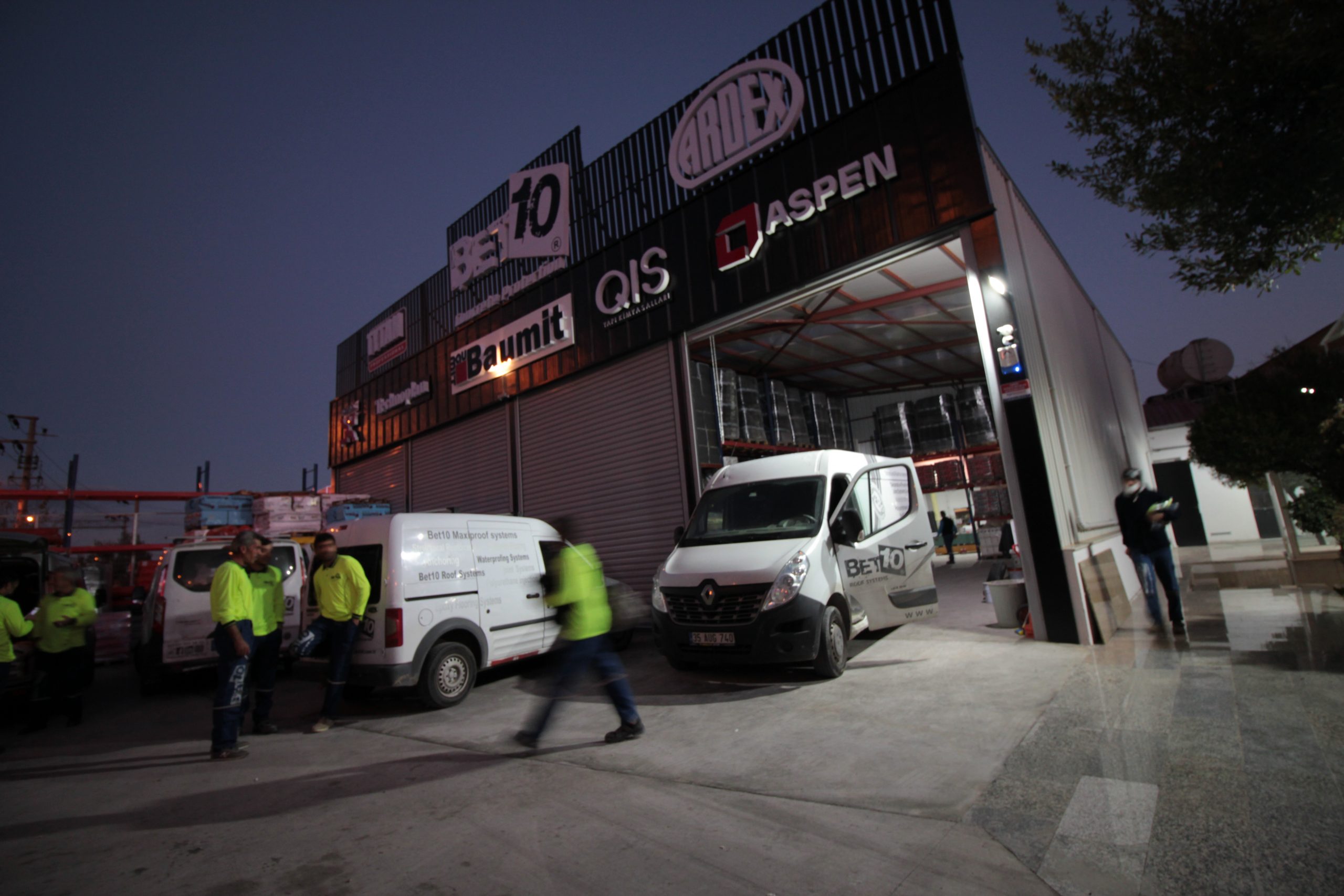
BET10 Protection Systems, with over 15 years of knowledge, skills, and experience in the construction sector, began its commercial activities in Izmir in 2018, becoming a leading company in its region. It continues to operate from its central office in Bornova Naldöken, with a storage area of 3000 m².
The company offers a wide range of application and material sales services, including foundation, curtain, and roof waterproofing applications, polyurethane injection, green roof systems, negative waterproofing, industrial and decorative floor coatings, thermal insulation, and final layer facade coatings.
With its expert team of architects and engineers, BET10 Protection Systems successfully undertakes projects in various fields such as residential, energy, healthcare, industrial facilities, and public structures. By providing high-quality and optimal solutions tailored to the nature of spaces, the company earns the trust and satisfaction of its partners.
BET10 Protection Systems continues its operations as an effective supplier and implementer to its partners with leading manufacturer dealership of construction chemicals in the industry and high-quality imported products.


İzmir yapı güçlendirme Karbon kumaş ile güçlendirme Yapı onarımı Kompozit yapı güçlendirme Beton güçlendirme Çelik güçlendirme Hasarlı yapı onarımı Dış cephe güçlendirme Su yalıtımı Yangın güçlendirme Deprem güçlendirme Betonarme güçlendirme Polimer güçlendirme Yapısal onarım Endüstriyel yapı güçlendirme Bina güçlendirme Karbon fiber takviyeli polimerler Yapısal mühendislik Mimari tasarım Yapı denetimi Yapı malzemeleri Güvenlik sistemleri İş güvenliği Yük testleri Mühendislik çözümleri Proje yönetimi Yerinde üretim Yerinde uygulama Yüksek mukavemetli malzemeler Yapısal hasar tespiti CFRP FRP izmir yapı malzemesi izmir yapı kimyasalları remmers baumex kalekim draco duratek hilti, fischer, weber, basf sika, ab-schomburg, epoksi, epoxy, ucrete mf, hf, purcem, flowcrete, johnlord, shıngle,zemin kaplaması, pvc,tpo, fpo, karbon, carbon,yapı güçlendirme, su yalıtımı, bentonit, mineralplus, taşyünü, camyünü, bitümlü membran, osb, alçıpan, drenaj, hdpe, swell, fireproof, btm, mardav, panetti, antiasit seramik, eps, xps, sututucu bant, pah bandı, dilatasyon, sikaproof, tamir haçları, grout, np1, poliüretan mastik, iş güvenliği malzemeleri, spor zemin, dualproof, kaplaması, poliurea, polyurea, poliüretan, enjeksiyon, çimento esaslı, yangın, yalıtımı, yalteks, ankara, istanbul, adana, antalya, bursa, manisa, aydın, balıkesir, bodrum, muğla, çanakkale, konya, izmit, bayraklı, turkiye,çimento esaslı,binder,latex,delme,kesme,beton,su deposu,arıtma tesisi,temel yalıtmı,bitümlü membran,çatı yalıtımı, carlise,firestone,tpo,soprema,ardex,k80,dekoratif kapala,duvar,zemin,endüstriyel, mapeproof preprufe, sikaproof, proof membran hdpe membran 1.2 mm hdpe membran bitüm proof membran ege bölgesi izmir istanbul ankara
Foundation waterproofing plays a critical role in the structural integrity and longevity of buildings. The foundation is one of the most crucial areas that provide load-bearing capacity and resilience to structures, and it possesses a vulnerability to water. Without effective foundation waterproofing, issues like water-induced cracks, rust, and freezing-thawing problems can gradually emerge. These issues can lead to the deterioration of the concrete in the foundation, thereby damaging the entire structure.
Furthermore, accumulated water in an inadequately waterproofed foundation can lead to moisture and mold formation within indoor spaces. This situation not only poses aesthetic concerns but also gives rise to health problems.
In this context, foundation waterproofing is an exceptionally critical step in ensuring the long lifespan, durability, and the creation of a comfortable living environment for buildings.
There are various methods for waterproofing the foundations of structures against water. Here are some methods commonly used for foundation waterproofing:
Foundation waterproofing enhances the durability of structures and prevents water-related issues. However, it’s important to consider factors such as building characteristics, water sources, and soil conditions before applying any waterproofing method.
Yes, waterproofing application can be done on a building’s foundation at a later stage. However, the effectiveness of such retroactive applications depends on the quality of the application and its compatibility with the structure.
Moreover, there can be challenges associated with retroactive waterproofing applications. For instance, the presence of existing structures on the foundation might make it difficult to properly place waterproofing membranes or coatings. Therefore, careful work and appropriate material selection are necessary for retroactive waterproofing applications.
In conclusion, applying waterproofing to the foundation during the construction phase yields the best results. However, retroactive applications can also be carried out, and in such cases, achieving effective outcomes relies on accurate material selection and quality implementation.
Foundation waterproofing, when combined with appropriate material selection and careful application, can yield highly reliable results. A successful waterproofing application prevents moisture issues beforehand, safeguarding the structure from water-related damages and extending its lifespan.
However, the quality of a waterproofing application depends on the characteristics of the chosen materials, the application method, the structure, and environmental conditions. Improperly executed or inadequately selected materials in waterproofing applications can deteriorate over time or prove ineffective.
For this reason, the reliability, effectiveness, and quality of waterproofing applications hinge on factors such as accurate material selection, skilled workmanship, suitable application methods, and regular maintenance. Properly executed foundation waterproofing can offer long-term and robust protection to the structure.
In earthquake-prone regions, the implementation of foundation waterproofing holds utmost importance in enhancing the resilience of structures against earthquakes. Natural disasters, especially in the absence of proper waterproofing, can diminish the structural integrity of buildings and increase the risk of damage.
Especially in areas prone to frequent earthquakes, foundation waterproofing application ensures protection against water-induced damages to structures. The majority of damages observed in buildings after earthquakes are related to water. Therefore, foundation waterproofing can help prevent water-related damages to structures in the aftermath of earthquakes.
Furthermore, water-related issues such as flooding that might occur post-earthquake can exacerbate structural damages. Hence, preventive measures like foundation waterproofing can mitigate post-earthquake damages and bolster the overall resilience of structures.
In conclusion, implementing foundation waterproofing in earthquake-prone regions can strengthen the structural resilience against earthquakes and aid in minimizing water-related damages that might occur in the aftermath of seismic events.